
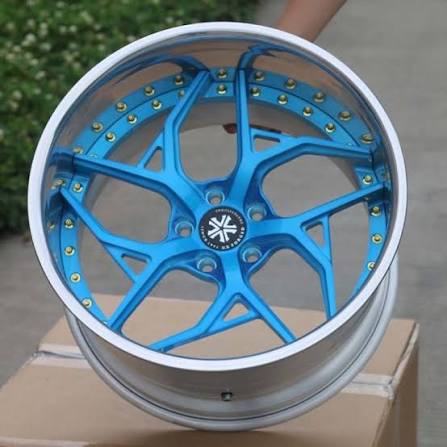
Choosing the right wheels for your vehicle is an important decision that affects appearance, handling, performance, and overall driving comfort. With so many wheel designs and manufacturing methods available, drivers often compare custom forged wheels with traditional cast wheels. Although both options serve the same basic purpose, they differ significantly in manufacturing processes, material structure, weight, strength, cost, and customization possibilities.
Understanding these differences can help you select wheels that match your vehicle, driving habits, performance goals, and budget. Whether you drive a daily commuter, a luxury sedan, a sports car, or a modified performance vehicle, knowing how forged and cast wheels compare will make the buying process easier.
Understanding Custom Forged Wheels
Custom forged wheels are manufactured using a specialized process that applies substantial pressure to a solid piece of metal, typically an aluminum alloy. The metal is shaped into a wheel blank and then carefully machined to achieve the required dimensions, design, and finish.
The forging process creates a dense material structure that can provide excellent mechanical strength. Manufacturers can use this strength to design wheels with carefully optimized shapes and reduced material in selected areas while maintaining the necessary structural integrity.
One major attraction of custom forged wheels is their flexibility. Buyers can often choose specific diameters, widths, offsets, finishes, spoke patterns, and other design details. This makes them appealing to drivers who want a personalized appearance combined with performance-oriented engineering.
Forged wheels are commonly associated with sports cars, luxury vehicles, motorsport applications, and premium automotive modifications. However, their suitability depends on the quality of the engineering, the vehicle’s requirements, and the intended driving conditions.
What Are Cast Wheels?
Cast wheels are produced by pouring molten aluminum alloy into a prepared mold. The metal cools and solidifies inside the mold, creating the basic shape of the wheel. Afterward, the manufacturer performs machining, finishing, inspection, and other necessary production steps.
Casting is widely used throughout the automotive industry because it allows manufacturers to produce large quantities of wheels efficiently. A single mold design can be used to manufacture many wheels with consistent dimensions, making the process suitable for factory-installed wheels and affordable aftermarket products.
Cast wheels are available in countless styles, from simple designs for everyday vehicles to attractive multi-spoke wheels for modified cars. Depending on the manufacturer and production method, they can also offer dependable strength and durability for ordinary road use.
For drivers who want to improve their vehicle’s appearance without spending a large amount, cast wheels can be a practical option. Their lower manufacturing costs often translate into more accessible retail prices.
Key Differences Between Forged and Cast Wheels
1. Manufacturing Process
The most fundamental difference between forged and cast wheels is how the metal is formed.
Forged wheels begin with solid metal that is shaped under high pressure. The process changes the metal’s structure and allows manufacturers to develop components with favorable mechanical properties.
Cast wheels, by comparison, are formed by allowing molten metal to solidify in a mold. This method makes complex shapes easier to reproduce and supports efficient large-scale manufacturing.
Both methods require careful quality control. The manufacturing process alone does not guarantee that every forged wheel is superior to every cast wheel. Alloy selection, engineering, heat treatment, machining, and inspection also influence the final product.
2. Strength and Durability
Strength is one of the most frequently discussed differences between forged and cast wheels. Forging can produce a dense, refined material structure that offers favorable strength characteristics. This can allow engineers to design certain wheels with less material while meeting their performance requirements.
Cast wheels can also be durable when manufactured correctly. However, their material structure and potential casting imperfections differ from those of forged products. Proper production controls help manufacturers reduce defects and maintain consistent quality.
For everyday drivers, durability depends on more than the manufacturing method. Road conditions, tire selection, wheel dimensions, load ratings, driving behavior, and maintenance all influence how long a wheel performs reliably.
A well-engineered wheel from a reputable manufacturer is generally a better choice than an inexpensive product with uncertain specifications, regardless of whether it is forged or cast.
3. Weight and Vehicle Performance
Weight is another important consideration when comparing custom forged wheels and cast wheels. Forged wheels can often be engineered to achieve lower weight while maintaining the strength required for a particular application.
Reducing unsprung weight, which includes components such as wheels and tires that are not supported by the vehicle’s suspension springs, can improve suspension response. Lower rotational mass can also help a vehicle accelerate and change speed more efficiently.
These benefits depend on the actual weight difference between the wheels being compared. Not every forged wheel is lighter than every cast wheel, particularly when their dimensions and designs differ substantially.
Cast wheels may weigh more in comparable applications, but many modern designs offer a useful balance between weight, strength, appearance, and affordability. Drivers should compare published weights for the exact wheel sizes they intend to purchase rather than relying solely on the product category.
4. Price and Overall Value
Price is often the deciding factor for buyers. Custom forged wheels generally cost more than cast wheels because their production can involve specialized equipment, additional machining, detailed engineering, and more extensive customization.
The final price can also increase with unusual dimensions, premium finishes, intricate designs, and low-volume production. For enthusiasts building a high-performance or luxury vehicle, these features may justify the additional investment.
Cast wheels are usually more affordable because their manufacturing process supports efficient production at scale. They allow drivers to refresh the appearance of a vehicle or replace damaged wheels without committing to a premium purchase.
The best value depends on your priorities. If you need attractive, reliable wheels for normal commuting, cast wheels may provide everything you require. If you prioritize reduced weight, precise fitment, and extensive personalization, forged wheels may offer advantages worth considering.
5. Design and Customization Options
Custom forged wheels are particularly appealing to enthusiasts who want their vehicles to stand apart. Depending on the manufacturer, buyers may be able to select wheel width, diameter, offset, bolt pattern, spoke configuration, center details, and surface finish.
These options can help create a cohesive appearance for a modified vehicle. They can also support precise fitment requirements when the manufacturer offers suitable engineering and dimensional options.
Cast wheels are not necessarily limited in appearance. They are available in numerous spoke patterns, colors, finishes, and styles. Modern casting techniques allow manufacturers to create visually complex designs that complement many different vehicles.
The main difference is often the level of individual customization available rather than the number of attractive designs. Drivers seeking a highly specific specification may find forged wheels more flexible, while buyers who prefer ready-made options may find cast wheels more convenient.
6. Heat Management and Braking Considerations
Wheels operate in an environment where braking systems generate substantial heat. Their design can influence airflow around brake components, especially during demanding driving.
Both forged and cast wheels can be engineered with spoke patterns that provide useful airflow. The effectiveness of a particular design depends on spoke spacing, wheel dimensions, brake configuration, and the vehicle’s cooling requirements.
It would be inaccurate to assume that every forged wheel provides better brake cooling than every cast wheel. Buyers should consider the complete design and confirm compatibility with their braking system, particularly when upgrading to larger brake components.
For track use or repeated heavy braking, selecting wheels designed and tested for the intended application is especially important.
Which Type of Wheel Is Better for Everyday Driving?
For daily driving, cast wheels are often a sensible option because they combine accessible pricing with a wide selection of practical designs. Drivers who travel on ordinary city roads and highways may not need the additional customization or performance characteristics associated with premium forged products.
However, road conditions should influence the decision. Potholes, uneven pavement, and rough surfaces can damage wheels regardless of manufacturing method. A wheel with an appropriate load rating, suitable dimensions, and a sensible tire combination is essential.
Forged wheels can also work well on daily-driven vehicles, especially when buyers want a premium appearance and carefully selected specifications. Their potential weight advantages may be useful, but they should be balanced against purchase cost and the possibility of expensive repairs or replacement.
Ultimately, the best daily-driving wheel is one that fits correctly, meets safety requirements, and suits the conditions in which the vehicle is used.
How to Choose the Right Wheels for Your Vehicle
Before purchasing either forged or cast wheels, review several important factors.
Check Wheel Fitment
Confirm the diameter, width, bolt pattern, center bore, offset, and load rating specified for your vehicle. Incorrect fitment can cause clearance problems, unwanted handling changes, or interference with suspension and braking components.
If you are considering a custom setup, consult a qualified wheel specialist to verify that the proposed dimensions are appropriate.
Consider Your Driving Style
Drivers who primarily commute may prefer affordable wheels with practical dimensions. Enthusiasts who participate in track events or prioritize responsive handling may place greater importance on wheel weight, engineering specifications, and documented performance testing.
Choose wheels based on your real driving requirements rather than appearance alone.
Evaluate Build Quality
Research the manufacturer, production standards, testing procedures, warranty, and product documentation. Ask whether the wheels have suitable load ratings and meet applicable safety requirements.
For demanding applications, independent testing and credible engineering information can be more useful than broad marketing claims.
Compare the Complete Cost
Consider more than the initial purchase price. Include tires, mounting, balancing, installation, replacement costs, and any additional fitment components that may be necessary.
A less expensive wheel that meets your requirements may offer better overall value than a premium product whose extra features provide little practical benefit for your driving habits.
Common Myths About Forged and Cast Wheels
One common misconception is that forged wheels cannot break. Although forging can provide excellent mechanical properties, no wheel is indestructible. Severe impacts, overloading, manufacturing defects, or improper installation can damage any wheel.
Another misconception is that cast wheels are automatically unsafe. Properly manufactured cast wheels designed for the vehicle’s load and intended use can provide dependable service. Quality, fitment, and condition matter considerably.
Some buyers also assume that forged wheels always improve fuel economy. Lower wheel weight may contribute to efficiency, but the actual result depends on factors such as vehicle design, tire characteristics, driving conditions, and the size of the weight reduction.
Understanding these distinctions helps drivers make decisions based on measurable characteristics rather than general assumptions.
Final Thoughts
Custom forged wheels and cast wheels both offer useful advantages, but they serve different priorities. Forged wheels appeal to drivers seeking premium customization, potentially lower weight, and favorable mechanical properties. Cast wheels remain popular because they provide attractive designs, practical performance, and accessible pricing.
Neither option is automatically the right choice for every vehicle. The ideal selection depends on your budget, driving habits, fitment requirements, and expectations.
Before making a purchase, compare the specifications of individual products, confirm their compatibility with your vehicle, and choose a reputable manufacturer. By focusing on engineering quality and practical requirements, you can select wheels that complement your vehicle’s appearance while supporting dependable performance on the road.