
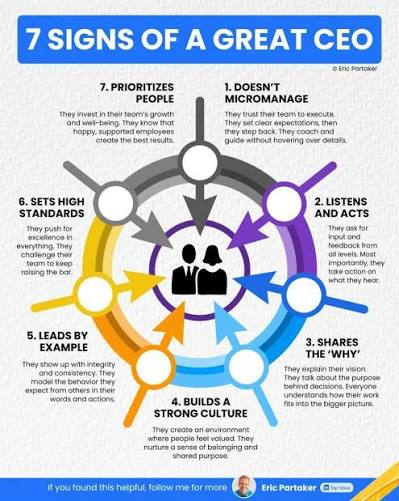
Great CEOs do more than manage companies, make important decisions, or monitor financial performance. They understand the deeper forces that determine what great CEOs understand whether an organization grows, adapts, and remains successful over time. While average leaders may focus primarily on immediate results, exceptional CEOs think about people, culture, customers, innovation, and long-term value at the same time.
The difference often comes down to perspective. Great CEOs recognize that leadership is not simply about having authority. It is about creating clarity, building trust, making thoughtful decisions, and preparing an organization for challenges that may not yet be visible. Understanding what great CEOs understand can provide valuable lessons for entrepreneurs, managers, and aspiring business leaders.
Vision Must Go Beyond Short-Term Results
Average leaders often concentrate heavily on quarterly performance, immediate targets, and solving today’s problems. These responsibilities matter, but great CEOs understand that sustainable success requires a broader vision.
Exceptional CEOs think about where their company should be several years from now. They consider changing customer expectations, emerging technologies, competitive threats, and new opportunities. Their decisions are guided by a clear understanding of the future rather than only by current circumstances.
A strong vision also gives employees a sense of purpose. When people understand where the company is going and why their work matters, they are more likely to contribute with commitment and confidence.
People Are a Company’s Greatest Advantage
Technology, products, and capital can provide competitive advantages, but great CEOs know that talented and motivated people are among the most valuable resources a company can have.
Average leaders may see employees primarily as workers responsible for completing assigned tasks. Great CEOs recognize that employees bring ideas, creativity, experience, and problem-solving abilities that can significantly influence business performance.
Strong CEOs invest in developing their teams. They encourage learning, recognize contributions, create opportunities for growth, and build environments where employees can communicate openly. They also understand that hiring the right people is only the beginning. Keeping talented employees engaged requires trust, meaningful responsibilities, and effective leadership.
Culture Is Built Through Everyday Actions
Many organizations publish impressive values on their websites and office walls. However, great CEOs understand that company culture is not created by statements alone. It is shaped by everyday decisions and behaviors.
Employees observe how leaders respond to mistakes, treat customers, handle pressure, reward performance, and communicate during difficult periods. These actions tell employees what the organization truly values.
A CEO who wants a culture of accountability must demonstrate accountability personally. A leader who wants innovation must be willing to accept thoughtful experimentation and occasional failure. Great CEOs understand that their behavior becomes an example for the rest of the organization.
Customers Reveal What Really Matters
Average leaders may focus on what their company sells. Great CEOs focus more deeply on why customers choose it.
Understanding customers requires listening to their concerns, studying their changing needs, and paying attention to how they experience a product or service. Customer expectations can change quickly, and businesses that ignore those changes can lose relevance.
Great CEOs encourage their organizations to remain close to customers. They understand that feedback is not simply criticism. It can reveal opportunities to improve products, services, communication, and overall customer experience.
Adaptability Is a Leadership Skill
The business environment rarely remains predictable. Markets shift, technologies develop, competitors change strategies, and unexpected challenges can emerge.
Average leaders may resist change because familiar processes feel safer. Great CEOs understand that adaptability is essential for survival and growth.
This does not mean changing direction every time a new trend appears. Instead, strong CEOs distinguish between temporary distractions and meaningful changes that require action. They remain flexible while keeping their core purpose intact.
Adaptable leadership allows companies to respond quickly without losing their identity.
Smart CEOs Know They Do Not Know Everything
One of the most important qualities of great leadership is intellectual humility. Average leaders may feel pressure to appear as though they always have the answer. Great CEOs understand that no individual can know everything about a complex organization.
They surround themselves with people who have different experiences, skills, and perspectives. They ask questions, listen carefully, and encourage constructive disagreement.
This approach can lead to better decisions because different viewpoints reveal risks and opportunities that one person might overlook. Great CEOs do not see knowledgeable employees as threats to their authority. They see them as valuable sources of insight.
Decision-Making Requires Both Speed and Thought
Leadership involves making difficult decisions, often without having complete information. Average leaders may either make impulsive decisions or delay action for too long.
Great CEOs understand the importance of finding the right balance. They gather relevant information, consider potential consequences, listen to trusted advisers, and then make decisions when action is necessary.
They also accept that some decisions will not produce the desired outcome. Instead of becoming paralyzed by the fear of mistakes, they learn from results and adjust when necessary.
The ability to make thoughtful decisions under pressure can become a major competitive advantage.
Innovation Is About More Than Technology
Innovation is often associated with advanced technology, but great CEOs understand that innovation can happen in many areas. A company can innovate through customer service, business models, internal processes, marketing, product design, or employee development.
Exceptional leaders create environments where useful ideas can emerge. They encourage employees to question inefficient processes and explore better ways of working.
At the same time, great CEOs understand that innovation needs purpose. New ideas should solve meaningful problems or create genuine value rather than simply following every popular trend.
Long-Term Trust Matters More Than Short-Term Wins
Average leaders may pursue quick victories even when those decisions create long-term problems. Great CEOs understand that reputation and trust take years to build but can be damaged quickly.
They recognize the importance of being honest with employees, customers, investors, and business partners. When challenges arise, transparent communication can strengthen relationships rather than weaken them.
Trust also influences employee loyalty and customer confidence. A company that consistently acts with integrity can develop relationships that become valuable competitive assets.
Great CEOs Prepare for What Comes Next
Perhaps one of the biggest differences between exceptional and average leadership is the ability to think beyond the present moment.
Great CEOs ask questions such as: What could disrupt our industry? What will customers expect in the future? Which skills will our employees need? Where should we invest today to create value tomorrow?
This forward-thinking approach helps organizations become proactive rather than reactive. Instead of waiting for change to force their hand, great CEOs prepare their companies to respond.
Conclusion
Understanding what great CEOs understand reveals that exceptional leadership is not simply about intelligence, authority, or business knowledge. It is about perspective and consistent execution.
Great CEOs understand the importance of long-term vision, talented people, strong culture, customer needs, adaptability, innovation, thoughtful decision-making, and trust. They recognize that sustainable success comes from connecting these elements rather than focusing on one metric or one short-term objective.
The best leaders also understand that leadership is a continuous learning process. Markets change, people evolve, and new challenges appear. CEOs who remain curious, adaptable, and willing to listen are better prepared to guide their organizations through uncertainty.
Ultimately, great CEOs do not simply build companies that perform well today. They build organizations capable of learning, adapting, and creating value for years to come. That long-term mindset is one of the qualities that truly separates exceptional CEOs from average leaders.